
Aramid Fabric Manufacturer Insights: How to Source High-Performance Materials
2026-07-11
Sourcing high-performance aramid fabric isn’t just about ticking boxes—it’s about finding a partner who understands the stakes. Whether you’re engineering protective gear, aerospace components, or next-gen EV solutions, the material you choose either shields lives or falls short. That’s why the best buyers don’t just read datasheets; they read between the lines of what manufacturers really deliver. In a market flooded with claims of “premium” quality, how do you separate substance from noise? This guide cuts through the clutter, offering a behind-the-scenes look at what sets true industry leaders apart. We also shine a light on how brands like DROTEX are raising the bar—and why that matters for your next project.
Spotting quality aramid suppliers without the guesswork
Every procurement manager knows the frustration: supplier catalogs paint identical pictures of excellence, yet real-world performance varies wildly. Spotting a genuinely quality aramid supplier isn't about trusting glossy brochures—it's about verifying how they handle the moments that matter. Look for transparency in raw material sourcing: do they openly share the origins of their para-aramid or meta-aramid fibers, or is that information guarded behind vague claims? True quality partners will walk you through their production floor virtually, explaining how tension control in weaving avoids microfibril damage that quietly degrades ballistic performance years later.
Dig deeper than the standard ISO certificates. A supplier worth their salt will have batch-level traceability that connects your specific roll of fabric back to the exact polymerization run, allowing you to pinpoint anomalies before they become field failures. Ask for third-party test reports that go beyond ASTM basics—request dynamic puncture resistance under temperature extremes, or UV exposure retention rates after 500 hours. If they fumble or redirect, you've uncovered a gap. The best suppliers don't just sell fabric; they proactively advise on lamination compatibility, storage conditions, and even seam design, because they've seen how small oversights snowball.
Finally, evaluate their communication cadence during sampling. A supplier obsessed with quality responds to technical queries with data, not delays. They'll send over videos of their testing rigs in action, unscripted, to show you exactly how your potential order is scrutinized. This willingness to expose their processes—warts and all—reveals a culture where consistency is engineered, not inspected in by chance. That's the difference between a transactional vendor and a partner who ensures your end product never catches a guesswork-induced surprise in the field.
Why not all aramid fabrics handle heat the same way
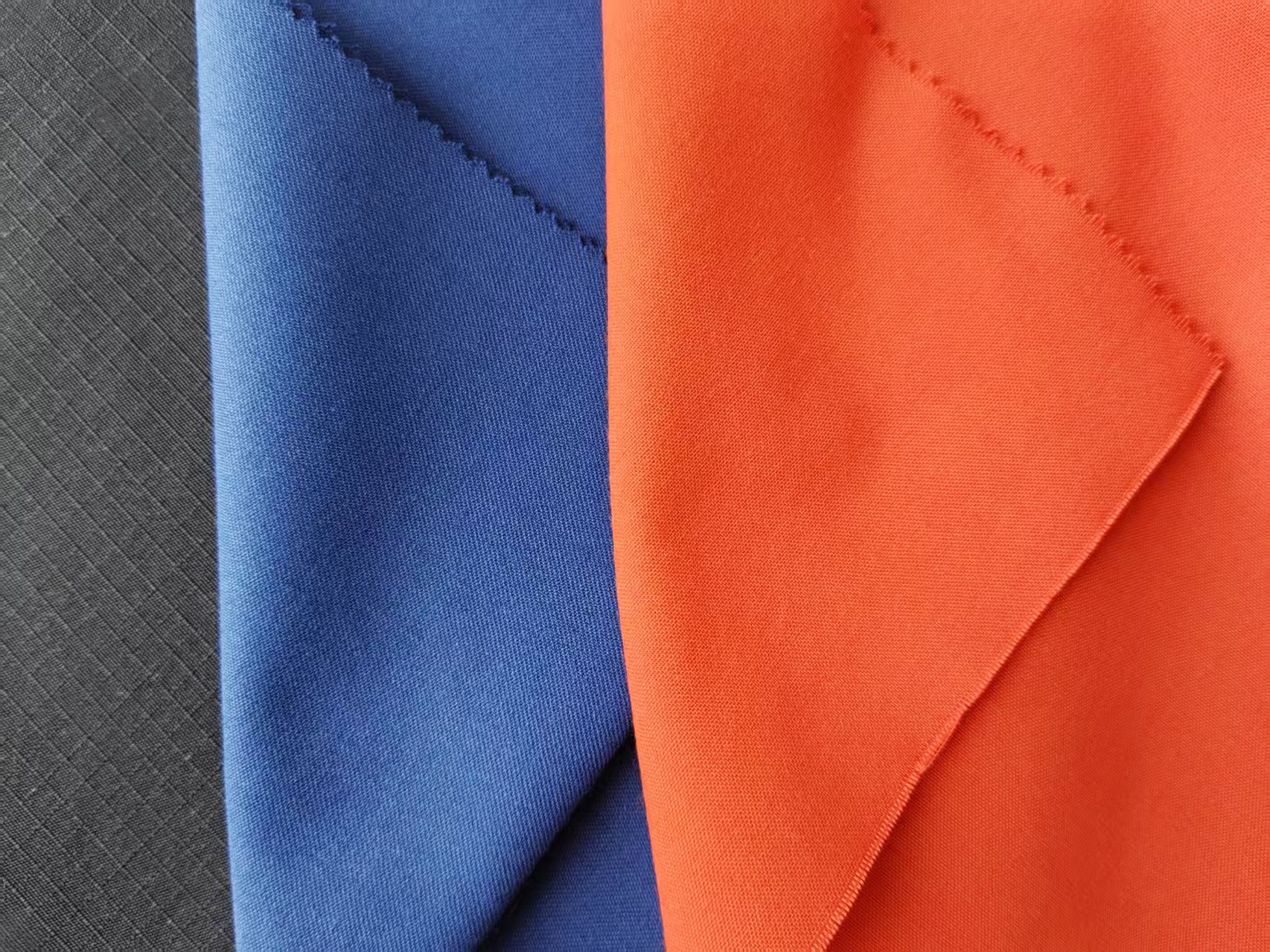
Aramid fabrics are often grouped together under the same heat-resistant banner, yet their molecular architecture tells a more complex story. The way aramid fibers are spun, crystallized, and post-treated creates subtle but meaningful differences in thermal stability. For instance, para-aramid varieties such as Kevlar rely on rigid, rod-like polymer chains that align into highly ordered crystalline regions. This structural precision grants exceptional strength and a decomposition temperature well above 400°C, but it also makes the material prone to rapid heat transfer along the fiber axis, which can affect insulation performance in certain configurations.
In contrast, meta-aramid fabrics like Nomex exhibit a more irregular chain packing, with kinked molecular backbones that disrupt crystallinity. This inherent disorder slows down thermal conduction and gives meta-aramids a broader window of protective comfort before charring begins. The trade-off is typically lower tensile strength, but the fabric’s ability to form a stable, insulating char layer under direct flame is often superior. Manufacturing choices—such as drawing ratios, heat-setting temperatures, and surface finishes—further influence how these fibers respond to sustained heat, making even nominally similar aramid textiles behave quite differently in the field.
Real-world performance also hinges on fabric construction and blending. A dense, twill-woven para-aramid shell might outperform a loose plain-weave meta-aramid in cut-and-slash scenarios, yet the latter could provide longer escape time in a flash fire because it forms a thicker protective char. Moisture regain, a rarely discussed factor, plays a role too: meta-aramids typically absorb more humidity, which can delay temperature rise through evaporative cooling during short-term exposure. These nuanced interactions between polymer chemistry, processing, and textile engineering explain why not all aramid fabrics handle heat the same way, and why selecting the right variant demands more than a quick glance at a spec sheet.
The overlooked role of weave patterns in performance
When we think about fabric performance, our minds often jump straight to fiber type or finishing treatments. Yet the weave pattern—the way threads intersect—quietly dictates how a textile behaves under stress, breathes, or drapes. A simple plain weave might offer stability but limited stretch, while a twill’s diagonal structure introduces subtle give and a smoother face. These differences aren’t just aesthetic; they shape endurance, comfort, and functionality in ways that are rarely given due attention.
Consider moisture management in activewear. A loose, open weave creates channels for airflow and wicking, keeping the skin dry without chemical assistance. In contrast, tightly packed weaves can trap heat and sweat, undermining the very purpose of performance gear. The interplay of warp and weft—whether it’s a satin weave’s floating threads that boost tear resistance or a basket weave’s enhanced porosity—directly influences how a garment handles real-world demands. Overlooking this means missing a critical lever for optimizing design.
Durability tells a similar story. In high-wear applications like outdoor gear or automotive upholstery, a fabric’s longevity hinges on how threads interlock. A herringbone variant, for instance, distributes tension across multiple points, resisting abrasion more effectively than a basic grid. Even subtle shifts in pick count or weave density can transform a mediocre material into a standout performer. The pattern isn’t just ornamentation—it’s architecture, and recognizing that is a quiet revolution in textile engineering.
Navigating minimum order quantities and lead times
Understanding minimum order quantities (MOQs) and lead times is a balancing act that can define your supply chain efficiency. MOQs dictate the smallest production run a supplier will accept, directly influencing your inventory commitment and upfront costs. Meanwhile, lead times—the period from placing an order to receiving goods—affect your ability to respond to market demand. Getting these two factors right means avoiding overstock and stockouts, two pitfalls that can drain your working capital or frustrate customers. A supplier’s stated MOQ often reflects their production economics; larger orders spread setup costs thinner, but they also require careful demand planning. Similarly, lead times aren’t just about shipping speed: they encompass material sourcing, production scheduling, and quality checks, all susceptible to disruptions. The key is to treat these numbers not as fixed barriers, but as variables you can influence through negotiation and strategic partnerships.
Many businesses accept MOQs and lead times at face value, but there’s often room to maneuver. Start by sharing your growth projections and repeat order potential—suppliers may lower MOQs if they see a long-term relationship. You can also explore phased delivery schedules, where the total order meets the MOQ but shipments are staggered to match your inventory flow. For lead times, investigate where delays truly stem from. Is it raw material procurement? Production bottlenecks? By mapping out the supplier’s process, you might identify opportunities to expedite steps you can influence, like providing earlier purchase orders or sharing demand forecasts. Sometimes, paying a small premium for rush orders or holding modest safety stock can cushion against variability, giving you more agility. The goal is to build a resilient framework that flexes with seasonal spikes and unexpected shifts without overextending your resources.
Navigating these constraints also means evaluating when to diversify or consolidate your supplier base. Relying on a single source with high MOQs and long lead times amplifies risk; a delay can ripple across your entire operation. Conversely, splitting orders among multiple suppliers might reduce individual lead times and offer more favorable MOQs, though it can increase management complexity. Consider hybrid approaches—maintaining a primary supplier for cost efficiency while using a secondary source for smaller, rapid-turnaround orders. Don’t overlook the power of transparent communication: regular dialogue about upcoming promotions or product changes helps suppliers align their production cycles with your needs. Ultimately, mastering MOQs and lead times isn’t about eliminating their inherent tensions; it’s about crafting a strategy that turns these constraints into levers for better planning and competitive advantage.
When custom blends outperform standard specifications
Many industries rely on standardized material blends because they're predictable and easy to source. But real-world applications often come with oddly specific demands—heat that kicks in a little too early, wear that shows up in unexpected places, or chemical exposure that doesn't match the usual test protocols. That's where custom blends start to pull ahead. By adjusting the ratio of base polymers, swapping in specialized additives, or tweaking filler content, you can dial in performance for the exact conditions a part will face, rather than settling for "good enough" from a spec sheet.
The gap tends to widen dramatically when you're dealing with edge cases—think extreme temperature swings, constant UV bombardment, or prolonged contact with aggressive process fluids. Off-the-shelf grades often fail gradually in these scenarios, showing stress cracks or losing mechanical properties well before their theoretical lifespan runs out. A custom blend, designed with that specific stressor in mind, doesn't just last longer—it can fundamentally change how a system performs. One example we've seen repeatedly is in sealing applications where a slight increase in compression set recovery, achieved through tailored crosslinking, eliminates a chronic leakage issue that standard nitrile or EPDM could never quite fix.
There's also a subtler advantage: you often end up using less material overall. When you don't have to over-engineer a part to compensate for a standard material's weakest property, you can slim down cross-sections, reduce cycle times, and avoid bulky design workarounds. The initial development cost might look steep, but when you factor in longer service intervals, fewer warranty claims, and eliminated secondary operations, the math usually flips in favor of a custom solution. It's not about blindly replacing standards—it's about recognizing that some problems wear a very specific shape, and the best answer is a material that was shaped to match.
Building a supply chain that survives disruptions
Resilience in supply chains isn’t about avoiding every storm—it’s about learning to bend without breaking. When a single factory shutdown in one region can ripple across continents, companies are rethinking the old playbook of lean, cost-obsessed logistics. Instead of betting everything on a handful of massive suppliers, many are quietly building a web of smaller, geographically spread partners that can step in when primary sources stumble. It’s less about perfect efficiency and more about having options that don’t fall apart under pressure.
Real durability comes from blending old-fashioned relationship building with new visibility tools. Smart teams are investing in technology that lets them see beyond their immediate suppliers, mapping out second- and third-tier dependencies they never used to worry about. But data alone isn’t enough—it’s the candid conversations with partners, the shared contingency plans, and the willingness to stock a little extra inventory of critical components that turn forecasts into actual safety nets. Some call it inefficiency; others see it as the price of staying operational when things go sideways.
Perhaps the hardest shift is cultural: moving from firefighting to constant preparation. Instead of reacting after a disruption hits, forward-thinking firms bake adaptability into everyday decisions. They rotate mock crises, empower local managers to make quick decisions without waiting for headquarters, and design products that can use alternative materials without a lengthy requalification process. It’s unglamorous work, often invisible until the next crisis doesn’t destroy a quarter’s earnings—but that’s exactly the point.
FAQ
Look for technical expertise in weaving and finishing, consistent quality control, and the ability to customize fabrics for specific applications. A manufacturer that invests in advanced looms and testing equipment can deliver materials with tighter tolerances and better repeatability.
Request detailed technical data sheets showing tensile strength, modulus, and thermal properties. Insist on certifications like ISO 9001 and material traceability. You can also ask for sample swatches and third-party test reports to confirm the yarn type and performance.
Communication barriers and inconsistent lead times are typical. Some suppliers may substitute cheaper para-aramid with lower-grade meta-aramid, so clear specs and regular audits are vital. Also, factor in logistics costs and import duties early on.
Standard off-the-shelf fabrics rarely meet niche requirements like extreme flame resistance or specific drape. A good manufacturer can adjust weave density, apply specialized coatings, or blend aramid with other fibers to optimize for your exact use case, whether it's ballistic protection or aerospace insulation.
Visit their facility if possible, or ask for a virtual tour. Check how they handle raw material sourcing—do they work with established yarn producers? Long-term partnerships with fiber suppliers often signal stability. Also, gauge their responsiveness and technical support during the sampling phase.
There's a growing demand for sustainable aramid options, like recycled fibers, and thinner yet stronger materials for lightweight armor. Automation in manufacturing is also improving consistency while keeping costs competitive for high-volume orders.
Conclusion
Sourcing aramid fabrics that consistently deliver under extreme conditions demands more than a standard RFQ. It starts with cutting through supplier claims by digging into their testing transparency—ask for third-party thermal resistance data, not just spec sheets, because not all aramid handles heat spikes the same way. A fabric’s true capability often hinges on weave patterns that get surprisingly little attention: a twill might give you drape for wearable gear while a plain weave boosts tear strength in rigid composites. Pair this with a practical grasp of minimum order quantities and lead times; the best mills won’t just quote, they’ll work with you to align production cycles with your project cadence, avoiding costly last-minute rushes.
When off-the-shelf grades fall short, custom blends step in—merging aramid with fibers like PBO or carbon can elevate flame resistance or stiffness beyond standard specs, but it requires a manufacturer that truly understands polymer synergies. Beyond the material itself, building a supply chain that survives disruptions means vetting suppliers for geographic redundancy and raw-material access, not just price per yard. The firms worth partnering with are those who view relationships as long-term collaborations, offering engineering support and inventory buffers that keep your lines running when global logistics seize up. Ultimately, intelligent sourcing blends technical scrutiny with supply chain foresight, turning high-performance materials into a reliable competitive edge.
Contact Us
Contact Person: Sandy
Email: [email protected]
Tel/WhatsApp: 86150 8310 5120
Website: https://www.frdrotex.com