

Aluminum Gravity Parts China: Premium Casting Solutions for Global Industries
2026-07-12
In the realm of precision manufacturing, China has quietly solidified its reputation as a powerhouse for aluminum gravity casting. From automotive components to intricate machinery, these premium castings are silently driving global industries forward. Yet, not all solutions are created equal. Among the leaders, DDR stands out with a blend of technical mastery and relentless quality control that turns raw aluminum into engineering marvels. But what truly sets their process apart in a crowded market? Let’s explore the hidden strengths behind these gravity-cast parts and why global players are taking notice.
Why Gravity Casting Delivers Unmatched Structural Integrity
Gravity casting relies on a simple yet powerful principle—molten metal flows into the mold cavity purely under the force of gravity, without high-pressure injection. This slow, controlled fill drastically cuts down on turbulence, which is a primary culprit behind trapped air and oxide inclusions in many other casting methods. Because the metal enters the mold steadily, gas porosity is minimized, and the resulting part exhibits a dense, homogeneous microstructure from surface to core.
Unlike high-pressure processes that can leave voids or microfractures as the metal cools under stress, gravity casting allows for more uniform solidification. The gradual drop in temperature encourages consistent grain growth, reducing internal stresses and weak spots. In alloys like aluminum or magnesium, this translates directly into superior fatigue resistance and load-bearing capacity—qualities that machined or forged parts often struggle to match without extensive post-processing.
In real-world applications, components produced via gravity casting hold up remarkably well under cyclical loads and harsh conditions. Engine blocks, suspension parts, and structural housings made this way consistently outperform their high-pressure counterparts in long-term durability tests. The absence of hidden internal flaws means predictable performance over the component’s lifespan, giving engineers confidence without overdesign or excess weight.
Tailoring Aluminum Components for High-Stress Environments
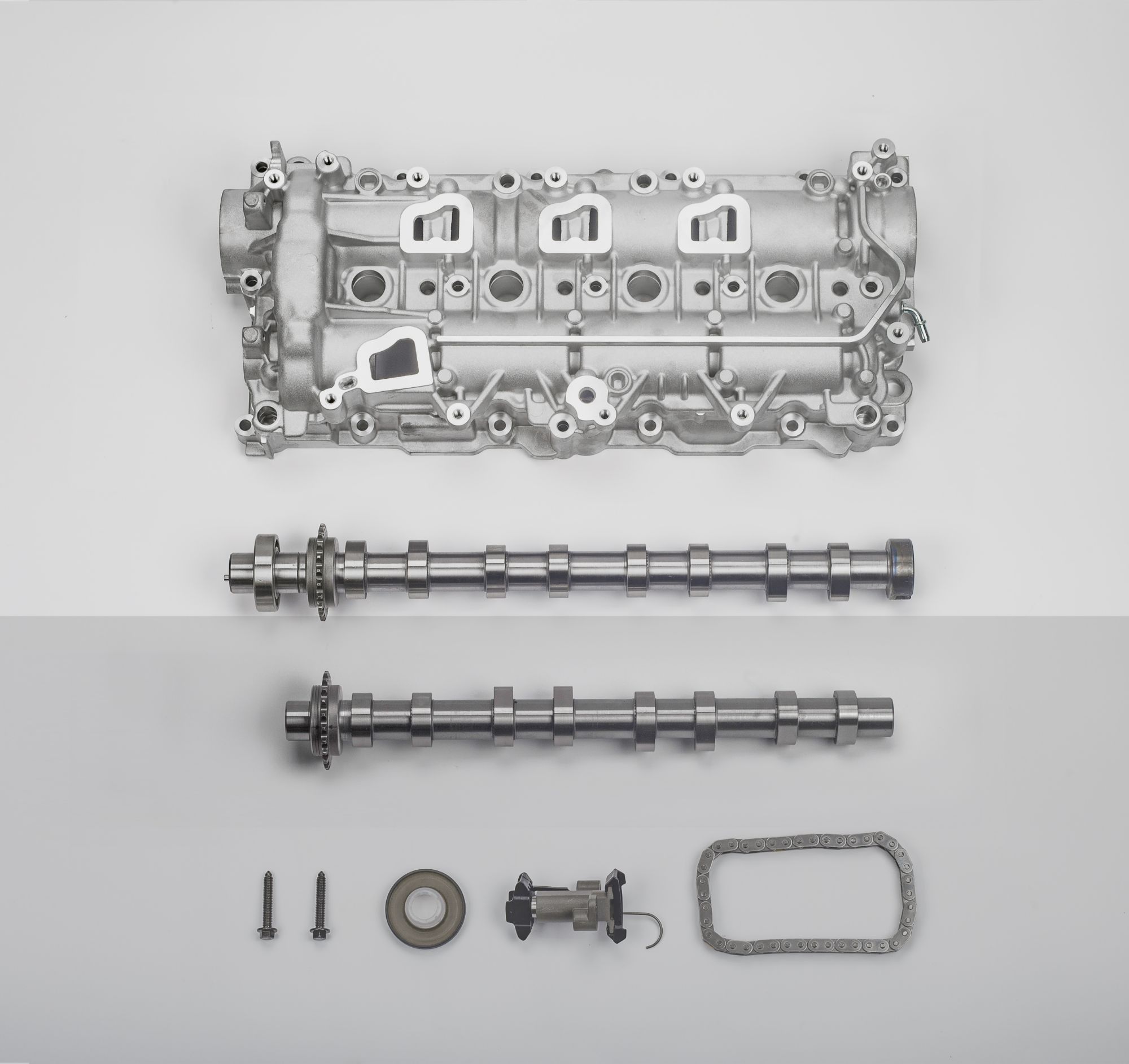
When ordinary aluminum falls short in demanding applications, custom-engineered solutions step in. High-stress environments—think aerospace structures, deep-sea equipment, or high-performance automotive parts—require more than just off-the-shelf alloys. The key lies in precise control over composition, grain structure, and heat treatment. By fine-tuning elements like zinc, magnesium, or copper, metallurgists create alloys that withstand extreme loads without adding unnecessary weight. It's a balancing act where every percentage point matters, and the result is a material that refuses to buckle under pressure.
But tailoring aluminum goes beyond chemistry. Advanced manufacturing techniques, such as isothermal forging or cryogenic treatment, alter the very microstructure of the metal. These processes can eliminate microscopic voids and align grain boundaries to resist crack propagation. The outcome is a component that not only survives but thrives in cyclical loading and harsh temperatures. Engineers often pair these methods with simulation-driven design—predicting stress hotspots and reinforcing them during production—so the final piece performs predictably when it matters most.
Quality assurance plays an equally vital role. Non-destructive testing, including ultrasonic and X-ray inspections, ensures that every tailored component meets the exacting standards of its intended environment. Real-world validation, from fatigue rigs to salt-spray chambers, confirms long-term reliability. Such meticulous attention makes these bespoke aluminum parts indispensable in industries where failure isn't an option. The result is a fusion of metallurgical science and practical engineering, delivering lightweight strength that standard materials simply cannot match.
Inside China’s Most Advanced Casting Facilities
Walking through the automated production halls, one is immediately struck by the sheer scale of integration. Massive robotic arms swing in precise coordination, handling molten metal with a deftness that defies their bulk. The air is thick with the silent hum of servo motors and the faint glow of thermal cameras, ensuring every pour is monitored for consistency down to the millisecond. It's a realm where human presence is minimal, with operators overseeing entire lines from glass-walled control rooms, their eyes fixed on data streams rather than machinery.
What truly sets these factories apart is their adaptive intelligence. Sensors embedded in molds relay real-time thermal profiles, allowing on-the-fly adjustments to cooling rates and alloy composition. This goes beyond mere automation — the systems learn from each cast, refining parameters to eliminate micro-defects that were once accepted as inevitable. Digitized sand cores are 3D-printed on demand, enabling complex geometries without the need for expensive tooling changes, a flexibility that was unthinkable a decade ago.
But perhaps the most telling sign of advancement lies in the seamless fusion of data and material science. Every component carries a digital birth certificate, linking its entire thermal history and structural integrity to the exact conditions of its creation. This traceability not only tightens quality loops but also feeds back into design revisions, shrinking development cycles from months to days. It's a holistic ecosystem, where casting is no longer a brute-force process but a choreographed dance of physics, algorithms, and precision engineering.
Accelerating Product Launches with Just-in-Time Casting
In industries where time-to-market can make or break a product, just-in-time casting has emerged as a strategic advantage. By synchronizing casting production directly with assembly schedules, manufacturers eliminate the lag of conventional inventory buildup. This lean approach accelerates entire launch timelines, slashing months off development cycles without compromising structural integrity. The result isn’t just speed—it’s the agility to respond to market shifts while competitors are still fine-tuning their supply chains.
A key driver behind this acceleration is the fusion of rapid tooling with on-demand foundry capacity. Instead of waiting for full-scale dies, teams use 3D-printed sand molds or CNC-machined patterns to produce functional castings in days rather than weeks. Parallel engineering thrives here: design tweaks happen overnight, and validated parts arrive before sunrise. It’s a continuous loop of iteration that keeps momentum high and last-minute surprises low, making the impossible launch date suddenly feasible.
Beyond pure speed, just-in-time casting reshapes risk management. With minimal inventory tied up, capital flows more freely toward innovation rather than warehousing. Short-run castings let companies test real-world performance early, refine on the fly, and scale up only when confidence peaks. That means fewer sunk costs if a feature flops, and a smoother ramp when it soars. In the race to launch, it’s the quiet enabler that turns bold ideas into delivered value—without the usual drag of traditional procurement.
Global Shipping Simplified: Logistics Without Headaches
Managing international freight often means grappling with a tangle of customs regulations, unpredictable delays, and opaque pricing. We strip away that complexity so you can focus on growth, not logistics guesswork. From origin to final mile, every leg is coordinated behind the scenes, giving you a single point of contact and real-time visibility without the usual back-and-forth chaos.
Our approach doesn’t treat your shipment like a number. We map out the most efficient paths, pre-clear documentation, and absorb the friction that usually eats into your margins. Whether you’re shipping bulk commodities or high-value goods, the process feels boringly reliable—exactly how it should be.
Instead of juggling multiple brokers, warehouses, and carriers, you get one team that already understands your flow. Problems are caught before they become emergencies, and costs stay predictable. That means fewer surprises, more time back in your day, and logistics that finally fade into the background where they belong.
Sustainable Sourcing: Recycled Aluminum and Energy Efficiency
In a world where resource depletion shadows every production decision, the shift toward recycled aluminum isn't just a checkbox—it's a quiet revolution. By re-melting scrap rather than mining bauxite, we slash energy consumption by up to 95%, sidestepping the carbon-heavy extraction that defines primary aluminum. This isn't about glossy promises; it's about rerouting supply chains to leaner, cleaner inputs without compromising the metal's integrity. Every ton reclaimed keeps raw ore in the ground and energy grids from unnecessary strain, creating a loop that feels more like common sense than innovation.
Energy efficiency threads through this process in ways numbers alone can't capture. Melting existing aluminum requires a fraction of the electricity, but the real gain lies in continuous improvement—furnaces tuned to precise temperatures, logistics streamlined to minimize re-melting cycles, and heat recovery systems that feed back into production. These aren't headline features; they're the unseen adjustments that quietly pare down waste. When a factory adopts such measures, the environment doesn't notice a single hero moment—it observes a steady, systemic lightening of industrial footprints.
What makes sustainable sourcing stick, however, is its unglamorous practicality. It's not about marketing a green veneer but about designing procurement that actually holds suppliers accountable. Tracing material origins, insisting on certified recycled content, and auditing energy use on the ground—these actions build a supply base where responsibility becomes a default, not a premium. Over time, the dialogue shifts from cost-based bargaining to a shared stake in resilience. That's when recycled aluminum stops being a niche choice and starts shaping how industries think about materials at scale.
FAQ
Gravity casting stands out because it relies on natural force to fill the mold, resulting in parts with superior density and fewer air pockets compared to high-pressure methods. This slow, controlled pour lets the molten aluminum settle into intricate shapes, giving manufacturers tight dimensional accuracy and a smooth finish right out of the mold.
China has built a massive ecosystem around aluminum casting—from raw material suppliers to specialized foundries—that few regions can match. The combination of skilled engineers, modernized production lines, and competitive pricing without corners cut on quality has made it a go-to hub. Many factories there also handle secondary machining and surface treatments in-house, streamlining the supply chain.
Reputable Chinese foundries follow international standards like ISO 9001 and IATF 16949, using thermal analysis and real-time X-ray inspection during production. They often run process audits and tensile tests on sample batches, catching defects early. The focus on lean manufacturing and automation helps keep variation low, even in high-volume orders.
Automotive, aerospace, medical equipment, and industrial machinery top the list. In automotive, you'll see these parts in engine brackets and transmission housings where strength-to-weight ratio matters. Medical device makers value the biocompatibility and corrosion resistance. Any sector that needs lightweight, strong, and thermally conductive components can find what they need.
Absolutely. Many foundries have rapid prototyping services and dedicated engineering support that can turn a 3D model into a first-article sample within weeks. They're used to working with overseas clients' design files and offer DFM feedback to improve castability. Combined with expedited sea and air freight options, lead times stay competitive even for rush jobs.
Beyond the standard shot blasting, you can get anodizing, powder coating, painting, or even electrophoretic coating. Many Chinese factories also do CNC machining to hit precise tolerances on mating surfaces. If the application requires it, they'll apply anti-corrosion treatments or special textures. All of this can be bundled under one roof, saving time and logistics headaches.
Conclusion
Aluminum gravity casting has long been the go-to method for industries that demand components with exceptional structural integrity, and Chinese manufacturers have refined this process to a level of precision that sets them apart. By pouring molten aluminum into permanent molds under the force of gravity, the resulting parts achieve a dense, fine-grained microstructure that is virtually free of porosity—this translates directly into superior mechanical properties and long-term reliability. For high-stress environments such as automotive powertrains, aerospace structures, or heavy machinery, these gravity-cast parts can be meticulously tailored in alloy composition and heat treatment to withstand extreme temperatures, pressures, and cyclic loads. China's most advanced casting facilities integrate automated pouring systems, real-time X-ray inspection, and computer-controlled solidification modeling, ensuring that each component not only meets but often exceeds international standards. The ability to rapidly iterate from design to prototype, coupled with just-in-time production scheduling, means that global clients can accelerate their product launches without tying up capital in warehousing or compromising on quality. This seamless operation extends to logistics—transparent supply chains, robust packaging, and partnerships with major freight carriers simplify global shipping, turning complex cross-border transactions into predictable, headache-free deliveries.
Beyond performance and convenience, China's aluminum gravity casting sector is making significant strides in sustainable manufacturing. Many foundries now operate closed-loop recycling systems, reclaiming scrap aluminum and re-melting it with minimal energy loss, all while maintaining the exacting purity required for critical applications. The shift toward recycled content not only reduces the carbon footprint of each component but also aligns with the circular economy goals of multinational corporations. Energy efficiency is a priority across these facilities, with waste heat recovery, electric resistance furnaces, and optimized production layouts that slash overall consumption. This environmentally conscious approach, combined with the inherent durability of gravity-cast parts, gives global industries a premium sourcing option that balances cost, performance, and ecological responsibility. Whether for a custom engine bracket or a batch of robot arms, Chinese gravity casting partners deliver a solution that is technically advanced, logistically sound, and kind to the planet—a trifecta that keeps industries moving forward with confidence.
Contact Us
Contact Person: Shelly
Email: [email protected]
Tel/WhatsApp: 8613967667688
Website: https://www.yongyu.com/