

Advanced Folding Carton Cutting Die Making Equipment That Elevates Packaging Precision and Speed
2026-11-26
Every millimeter counts when a folding carton hits the die cutter at full speed. Slight misregistration, uneven creasing, or a tool that wears too soon can quietly drain profit from even the most efficient packaging line. That is where ADEWO changes the equation. Built for converters who refuse to choose between precision and throughput, ADEWO's advanced cutting die making equipment combines tighter tolerances, faster setup, and longer-lasting tooling into one production-ready system. In this post, we look at the engineering details behind that performance and what they mean for your next packaging run.
Where Micro-Tolerance Tooling Meets Carton Accuracy
Precision in carton production rarely starts with the paper. It starts with the tools that cut, crease, and score it. Micro-tolerance tooling brings a level of repeatability that ordinary die-cutting simply cannot match — every fold line lands within a few microns of where it should, every cut edge stays clean without tearing the substrate. That kind of control matters most when you are running lightweight recycled boards or high-gloss coated stocks, where a slight drift in tool geometry turns into visible misregistration downstream.
What changes is not just the tool itself but the entire conversation between design and finishing. When the creasing matrix, stripping pins, and cutting rules are machined to tolerances tighter than the thickness of a human hair, the carton behaves predictably on the gluer and in the packing line. Folded panels meet exactly, glue flaps sit flush, and the final erected box holds its squareness under stack pressure. This is where tooling stops being a consumable and becomes an engineering partner.
Achieving that level of accuracy means moving away from hand-adjusted rule setups and toward digitally verified tool geometries. Each die is measured, compensated for material springback, and tested against the actual board caliper before it ever reaches production. The result is a carton that opens smoothly, closes without fighting the crease, and presents the brand with edges that look intentional rather than processed.
Faster Die Production Without Sacrificing Cut Quality
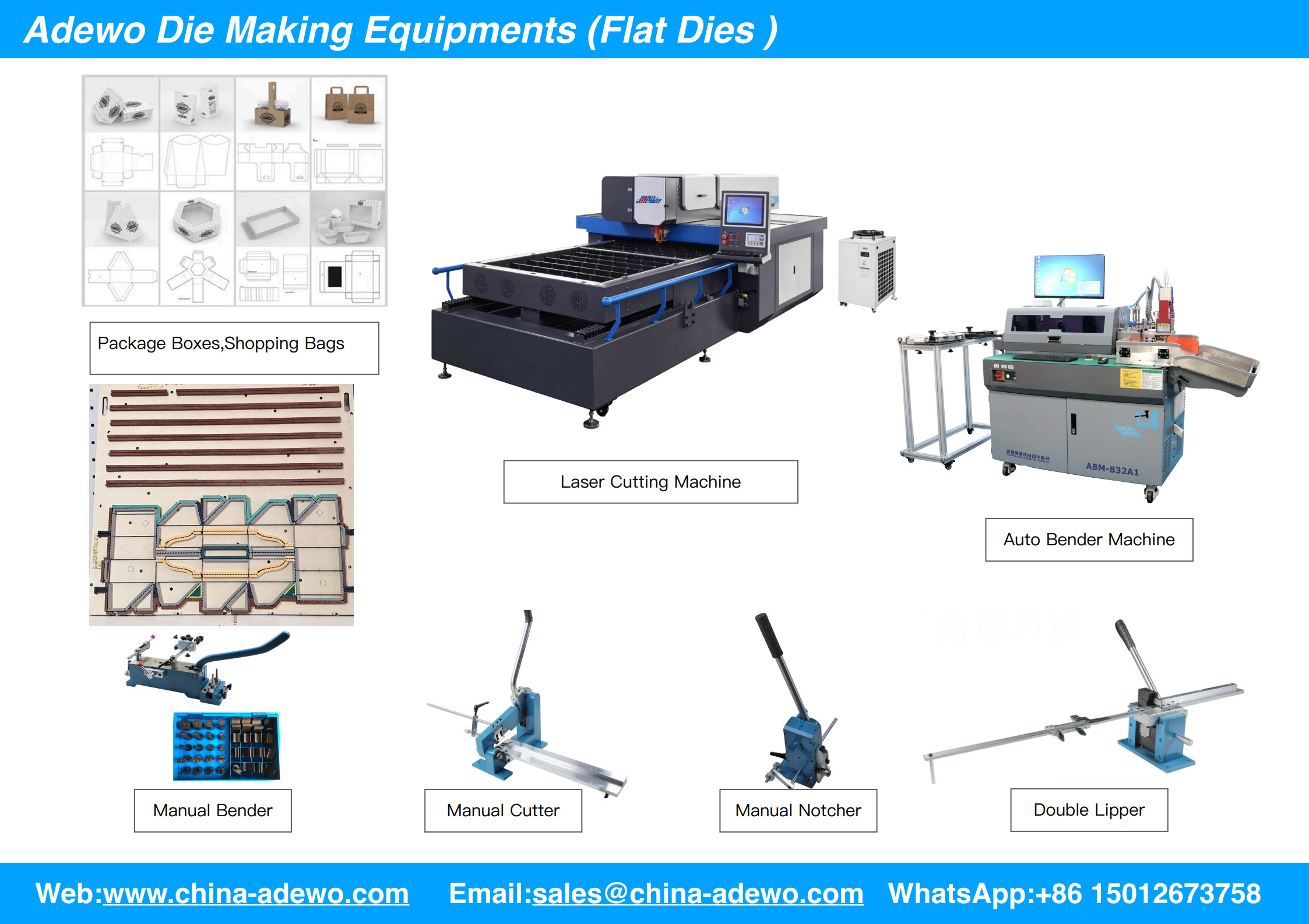
Die production often forces a trade-off between output speed and edge quality, but that conflict isn’t inherent. The real difference comes from how the cutting force is managed. By refining the die geometry, controlling clearance with tighter tolerances, and using surface treatments that reduce friction at the shear zone, manufacturers can push cycle times higher without inviting burrs, rollover, or micro-fractures along the cut edge. It’s less about slowing down and more about making the cut path predictable at each stroke.
Tooling maintenance habits play a larger role than many realize. Progressive dies run faster when wear is monitored at the punch tip and die land, since dull spots don’t just slow the press—they create inconsistent fracture zones and ragged edges. A shift from reactive sharpening to condition-based touch-ups keeps the cut clean at higher rates, while advanced coatings like titanium aluminum nitride preserve sharpness under thermal load. The goal isn’t to push the tool until it fails, but to keep the working edges within a narrow performance band.
Material behavior also changes with speed. Higher velocity can harden the edge or induce tearing if the die isn’t tuned for the specific alloy and thickness. That’s why faster production lines often succeed with adaptive press settings: slight adjustments in dwell, stripper pressure, and lubrication delivery compensate for the dynamic response of the strip. When those variables are matched to the die design rather than left at generic defaults, cycle time gains become repeatable, and cut quality stops being the factor you forfeit.
Built for the Pressures of High-Volume Packaging Lines
High-volume lines punish weak points quickly. Constant indexing, film tension spikes, heat from sealing jaws, and vibration from upstream fillers all hit the frame and guides at once. The frame uses thicker cross-bracing and the film path rides on sealed linear rails, so alignment stays consistent even when the line runs back-to-back shifts.
Rather than chasing faults after they appear, the control logic reads tension and seal temperature several times per cycle. It adjusts dwell, feed length, and jaw pressure in small increments, which keeps bag dimensions stable across roll changes and humidity swings. That matters most at line speed, where a single miscut multiplies into scrap within minutes.
Changeover is treated as part of throughput, not a pause. Tool-less guide adjustments, stored recipes, and wide-open web access let operators switch film widths or bag lengths without pulling out wrenches or rethreading from scratch. The result is less downtime between runs and fewer reasons for the upstream line to slow down.
Intelligent Engineering Behind Cleaner Creases and Sharper Cuts
A fold that looks crisp from the outside usually depends on what happens just beneath the surface. Instead of forcing a single edge to do all the work, the design spreads pressure along a narrow but carefully shaped contact zone. That approach lets the material yield exactly where it should, while the surrounding fibers stay undisturbed enough to hold a clean line.
On the cutting side, the difference between a sharp result and a damaged one often comes down to speed and support. The tool path is not simply driven harder; it is matched to the way the material responds at the point of contact. Micro-adjustments in angle, clearance, and feed keep the separation smooth, reducing burrs and edge deformation without slowing the process more than necessary.
Over time, the system watches for drift rather than waiting for failure. Wear patterns, temperature shifts, and slight changes in resistance are read as signals, not noise. That allows the mechanism to stay within a narrow performance band and keeps the output consistent, even when components have begun to settle in.
From CAD File to Finished Cutting Die with Fewer Bottlenecks
The path from a CAD model to a finished cutting die usually stalls before the first chip is cut. Design files pass through neutral formats, get re-surfaced, and pick up small inconsistencies that only become visible during spotting. Keeping the die geometry linked to the source file while preparing the cutting program avoids that early round of silent edits, so the machined edge matches the approved contour without extra repair loops.
Bottlenecks also collect around material staging and secondary operations. A die that has been roughed on a mill still needs wire work, drilling, and surface finishing, but those steps do not have to wait for entire batches to move as one block. Sequencing by geometry type and plate thickness instead of job number lets short runs slip through while larger plates are still being processed. This keeps individual workstations busy without turning the shop floor into a queue of half-finished dies.
At the final stage, inspection and tryout often reveal problems that could have been caught much earlier. Comparing the machined profile back to the CAD reference at each setup removes that late-stage guesswork, because any drift is identified while the plate is still clamped. Corrections are made in a single setup, and the die leaves with fewer hand-fitted surprises. The whole route feels less like a sequence of handoffs and more like one continuous conversation between the model, the machine, and the bench.
Precision Hardware That Handles Complex Folding Carton Layouts
Folding carton work has a way of punishing loose tolerances. Layouts cram narrow waste strips, off-center scores, and small nicks into sheets that still need to run flat at high speed. The hardware that handles this is not just heavy; it is stiff where it counts. Bearings on the cutting and creasing shafts are preloaded so there is no sideways float, and the impression adjustment uses a fine-pitch mechanism rather than a coarse wedge. That keeps knife depth and crease depth from drifting after a few thousand sheets.
Complex layouts also shift between dense cutting areas and long unsupported spans. This is where balanced die carriers and precision-ground chase plates earn their keep. A slight crown or worn corner will show up as broken nicks on one edge and deep creases on the other. Machines built for this work often include dial indicators or direct digital feedback for each side of the impression cylinders, so an operator can set a layout once and trust it through a full run. Quick-lock chases and pin-registered stripping boards reduce slop that normally causes tool damage when a job repeats.
In practice, that kind of hardware changes what a plant can take on. Instead of simplifying layouts to protect an older machine, you can run the intricate designs customers request: small windows, tight radii, layered tuck flaps, and minimal gutters. The result is cleaner stripping, less hand finishing, and far fewer stops for crease depth drift. For folding carton work, precision is not an upgrade; it is the reason the layout survives contact with the sheet.
FAQ
It really shines on intricate tuck-end and auto-bottom cartons where cut-to-crease registration has to stay tight across long runs. Multi-point stripping and blanking setups also come out cleaner because the tooling is produced with less cumulative variance.
The main difference is repeatability. The cutting and creasing positions are locked in during the machining stage, so a die that leaves the table matches the CAD layout far more closely. That means fewer hand adjustments later and less fighting on press.
Yes, but speed comes from removing rework rather than simply pushing the machine harder. Automated tool changes, shorter setup sequences, and consistent outputs let a shop move from file to finished die in a tighter window.
Waste drops when the crease and cut positions are precise from the first sample. Cartons fold square, glue lines land where they should, and there are fewer rejected sheets from misregistered cutting or weak crease formation.
It is, especially when changeover time matters. The quicker you can produce an accurate die for a new SKU or seasonal design, the more viable short-run work becomes without tying up production for hours.
Regular cleaning of chip evacuation paths, checking tool condition, and keeping calibration routines on schedule make the biggest difference. Small deviations in the machine frame or spindle show up quickly in the finished die, so routine checks matter more than reactive repairs.
It gives you more control over crease depth and cut pressure, which is essential when moving from lightweight SBS to heavier recycled board or micro-flute. The tooling can be tuned to the substrate instead of relying on a one-size-fits-all setting.
There is a learning curve, but it is more about understanding digital file preparation and calibration than manual toolmaking. Skilled die makers often adapt quickly because they can read the results and know when a setting is off.
Conclusion
Modern folding carton work leaves little room for tooling that wanders by a few thousandths of an inch. This advanced cutting die making equipment pairs micro-tolerance machining with the everyday reality of carton accuracy, keeping every score, nick, and cut edge where the layout intended. The advantage becomes obvious on complex folding carton layouts, where dense panels, small tabs, and tight crease channels quickly expose sloppy tooling through jammed feeders, cracked folds, or ragged stripping. Rather than forcing converters to choose between speed and precision, the platform shortens the trip from CAD file to finished die by cutting out manual rework and synchronizing cutting, creasing, and stripping stations earlier in the build. The result is less trial-and-error on the bench and more confidence when the die reaches the press.
What sets this machinery apart in high-volume packaging lines is its ability to hold cut quality as throughput rises. Cleaner creases and sharper cuts come from controlled clearances, repeatable material handling, and intelligent engineering that reduces constant operator adjustment. Die production accelerates not because corners are skipped, but because bottlenecks around fitting, checking, and correcting are designed out of the workflow. That matters when a single misregistered die can idle a converting line or send inconsistent blanks into the folder-gluer. Tooling built this way withstands sustained runs, handles demanding layouts without losing registration, and gives converting teams a steadier foundation for faster turnaround and cleaner finished cartons.
Contact Us
Contact Person: KAELYN LEE
Email: [email protected]
Tel/WhatsApp: +86 15012673758
Website: https://www.china-adewo.com