

ABB Frequency Converter Distributor You Can Trust for High-Performance Drives
2026-10-01
When your production line depends on precise motor control, picking the right ABB frequency converter distributor feels less like a purchase and more like a partnership. Soochee has built that trust by delivering high-performance drives with genuine technical backup. Here’s what actually separates a dependable distributor from the rest—and why Soochee keeps showing up at the top.
What Actually Matters When Sourcing ABB Drives
The real differentiator when sourcing an ABB drive isn't the brand name itself, but how precisely the drive matches your motor and application. Start by checking whether the continuous output current rating covers the motor's full load amps across the entire speed range, not just the nominal point. Overload duty cycles matter too — a conveyor may need 150% torque for 30 seconds, while a centrifugal pump rarely exceeds 120% for a few seconds. Environmental factors are equally critical: if the drive will sit in a panel where the ambient temperature regularly exceeds 40°C or the installation site is above 1000 meters altitude, you'll need to derate the drive or choose a higher frame size. Beyond that, the communication protocol is often a hidden source of integration pain. Verify that the drive natively supports Profinet, EtherNet/IP, or Modbus TCP rather than planning to add a fieldbus adapter later, because the cost of a gateway module and its configuration time can erase any initial savings.
Another factor that separates a smooth procurement from a costly headache is the availability of spare parts and the software tools needed for commissioning. While ABB drives are widely distributed, not all local distributors stock the same range. A common mistake is assuming that an ACS580 and an ACS880-01 with similar horsepower ratings are interchangeable — they differ in control board firmware, option module slots, and even recommended cable entry orientation. Before placing an order, check the actual repair turnaround time for the specific model, not just the general brand reputation. Ask whether the distributor has direct access to parameter backup software like Drive composer pro or a licensed technician who can restore settings after a board replacement. A drive that works fine in a lab but takes three weeks to service in your region will cause far more downtime than the difference in unit price suggests.
Finally, evaluate the full lifecycle instead of focusing only on the purchase invoice. Energy efficiency at partial load often diverges from the nameplate efficiency rating because most industrial motors rarely run at full speed. Built-in safety functions such as Safe Torque Off can replace separate safety relays and reduce wiring complexity, while integrated harmonic mitigation — whether through DC chokes or an active front end — may protect other equipment on the same bus. If this is a retrofit rather than a new installation, physical fit is not guaranteed: measure the old drive's mounting dimensions, cable bending radius, and clearances before assuming the newer generation will slide into the same enclosure. Taking a few extra minutes to verify these details upfront prevents the kind of on-site modifications that quietly double the installed cost.
Reading Between the Lines of Drive Specifications
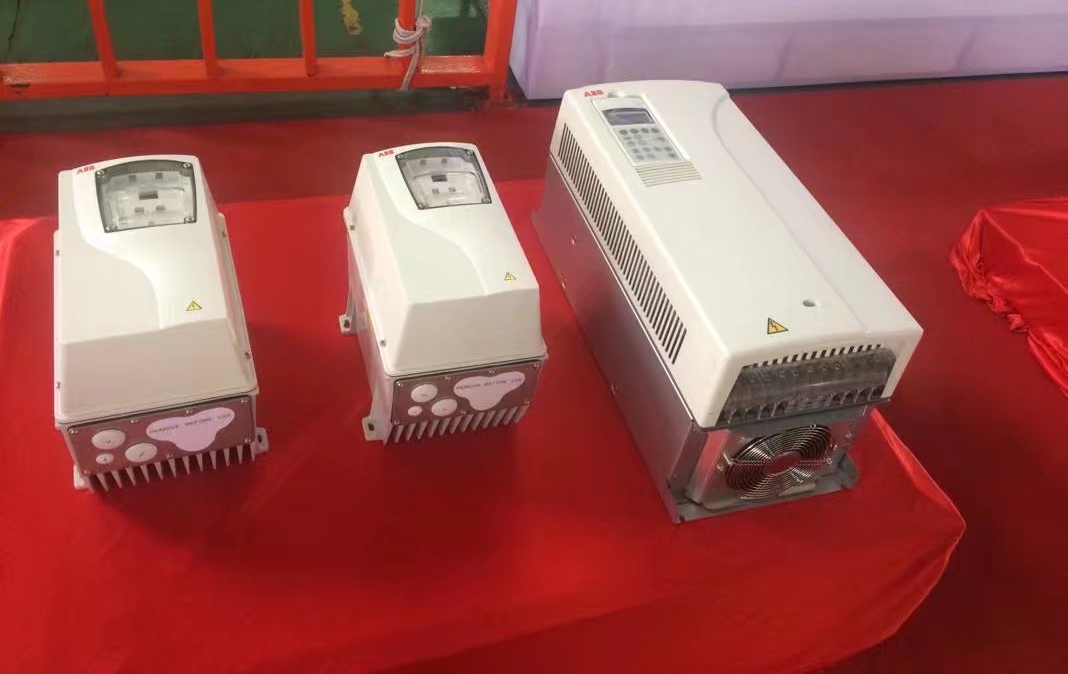
Most spec sheets list peak transfer speeds, but those numbers tell only half the story. A drive that bursts at 7,000 MB/s can stumble to a fraction of that under sustained load, once the cache fills and the controller struggles to keep up. That gap between headline performance and real-world consistency rarely appears in bold print, yet it shapes everything from large file transfers to video editing timelines.
Endurance ratings hide their own assumptions. A 600 TBW figure sounds reassuring until you notice it applies only to sequential writes, while random small-block workloads age NAND cells far faster. Temperature throttling, power draw under load, and rebuild times in RAID arrays are similarly glossed over. Spec sheets list maximums, but drives behave very differently when pushed toward those limits hour after hour.
Smart buyers learn to read between the rows: the controller maker, the NAND type, the cache strategy, and the firmware notes that hint at revision history. A spec sheet is a promise under ideal conditions. Reading between the lines is how you figure out what happens when conditions get messy.
Stock Availability That Keeps Your Line Moving
A line stoppage caused by a missing component costs more than idle time. It ripples into downstream work, packing, and shipping. Keeping a live count of what is on hand and what is inbound lets you reroute or expedite before a gap opens.
Stock buffers are not about hoarding; they are about timing. A tight window between supplier delivery and assembly use can be managed if you track consumption rates by shift, not just by week. The line moves when the right part lands at the workstation minutes before it is needed, not days later.
Work with suppliers on shared min and max levels and automated replenishment triggers. That way availability becomes a rhythm instead of a daily fire drill.
Energy Tuning Without the Usual Complexity
Most energy tuning systems bury the basics under layers of procedure. You get charts, step-by-step rituals, and a vocabulary that feels like homework. The result? You spend more time figuring out whether you're doing it right than actually noticing a shift. That kind of friction defeats the purpose.
The alternative is refreshingly direct. Take a few everyday moments—sitting still, breathing slowly, paying attention to tension in your shoulders or jaw—and make small, deliberate adjustments. No special equipment, no thirty-minute protocol, no need to label every sensation. The goal isn't to perform a perfect technique; it's to tune into what your body and mind are already telling you.
When the process stays this simple, it stops being a chore you postpone. You might do it while waiting for coffee or between meetings. Over time, those tiny resets build into a steadier baseline. You feel less scattered, more present, and better able to handle stress—without ever having to master a complex system.
On-Site Support Before and After Installation
We send a technician to walk the site before any hardware arrives, checking power loads, mounting surfaces, and cable paths that drawings often miss. This pre-install visit catches issues like inadequate ventilation or hidden structural limits, so the actual setup doesn't stall halfway through.
During installation, the same team handles physical placement, wiring, and initial configuration, but they also stick around to run real workloads and watch for thermal or signal problems that only show up under load. If something drifts out of spec, it gets corrected on the spot instead of being left for a remote ticket.
After the system is live, we schedule a follow-up visit to recheck connections, adjust mounting tension, and confirm that noise or vibration hasn't shifted anything. This isn't a token walkthrough; it's a chance to recalibrate sensors and answer operator questions before small drift becomes downtime.
Why Local Service Beats Long Supply Chains
When a critical machine goes down, the difference between a local technician arriving this afternoon and a replacement part clearing customs three weeks from now is measured in lost revenue, not just inconvenience. Local service providers don't route your request through a distant call center or wait for a shipping container to arrive; they keep the parts and expertise you need close enough to act on the same day. That kind of immediacy is hard to replicate when every link in a long supply chain adds another delay, another handoff, another point of failure.
Beyond speed, local service builds a working relationship that no tracking number can replace. The person who fixes your equipment knows your setup, your staff, and the quirks of your operation because they've been there before. They can spot a wearing belt or a misaligned sensor before it becomes a full shutdown. Long supply chains, by contrast, often deliver generic solutions from a warehouse that has never seen your floor, leaving you to adapt their process to your reality instead of the other way around.
There's also a quiet reliability in keeping things close. You don't have to gamble on weather delays at a port, customs paperwork, or a shortage of shipping containers. A local service agreement means the person you call answers the phone, knows your name, and can be on site without waiting for an international logistics window. That predictability is often worth far more than the marginal unit cost savings promised by a distant supplier.
FAQ
Look for proven technical expertise, prompt support, and a track record of delivering genuine units with proper warranty coverage—not just a storefront with low prices.
They’re built with robust thermal management, advanced motor control algorithms, and protective features that tolerate dust, vibration, and wide temperature swings common in plants.
ABB drives offer tighter speed regulation, smoother low-speed torque, and reliable fieldbus integration, which reduce downtime and energy waste in complex applications.
Inquire about lead times, spare parts availability, commissioning support, and whether they can size the drive correctly for your specific motor and load profile.
A competent distributor can guide you through compatibility checks, parameter mapping, and installation practices, saving hours of trial and error during a retrofit.
It’s crucial—regular firmware updates, capacitor inspections, and cooling fan maintenance can extend drive life significantly, so choose a distributor that offers these services.
Vague specifications, no physical inventory, unresponsive technical staff, and pressure to accept substitutes are red flags that often lead to costly downtime.
Conclusion
When a production line stops because a frequency converter has failed, the purchasing decision stops being theoretical. You need a distributor who understands that a drive is not a commodity part but the heart of motor control. Sourcing ABB drives means looking beyond the part number: checking how the unit behaves under overload, whether the harmonic mitigation matches your grid, and if the communication protocol will integrate with your existing PLC. A reliable distributor helps you read through the spec sheets, pointing out the details that actually affect performance rather than just quoting the next model up. They also keep inventory of the sizes most often used in your region, so a replacement isn't stuck on a cargo ship while your conveyors sit idle. And when it comes to energy, the conversation shouldn't require a PhD: setting up the drive for optimal flux or adjusting acceleration ramps can lower your kWh without making the system sluggish. The right partner walks you through those settings in plain language, sometimes even before you place the order.
The difference becomes even clearer after installation. A distributor with local technicians can be on site for startup, check the drive's behavior under load, and train your maintenance crew on the basics. If something goes wrong months later, you aren't waiting for a reply from a time zone eight hours away—you get a visit or a same-day replacement from a nearby shelf. Long supply chains look fine on a spreadsheet until a single fault shuts down an entire shift. Local service means someone who knows your plant, remembers your previous orders, and can diagnose a problem over the phone before it escalates. That kind of support isn't a premium service; it's what a trustworthy ABB distributor should provide as standard. In the end, the drive's nameplate says ABB, but the reliability of your operation depends just as much on the distributor behind it.
Contact Us
Contact Person: Jenny Jaa
Email: [email protected]
Tel/WhatsApp: 0086 152 9510 6006
Website: https://www.china-motor-supplier.com
